What’s the Splintering or Cracking in My Headlights?
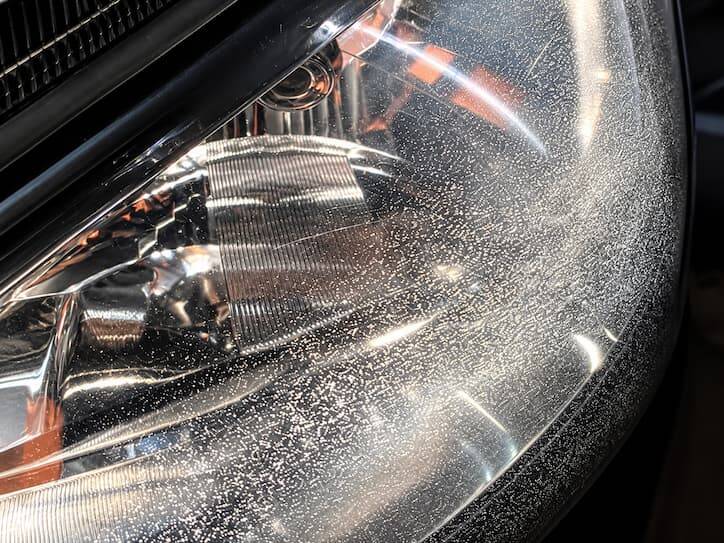
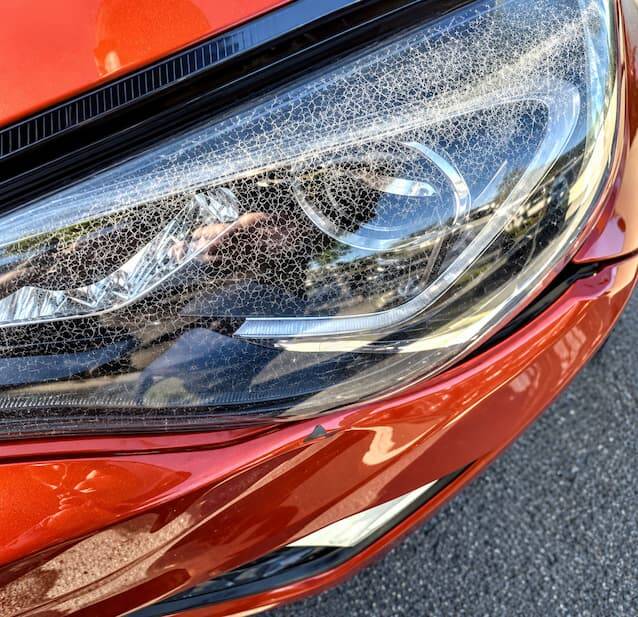
If your headlights look like they have tiny cracks, splintering, spiderweb patterns or fine lines running through the lens, you might assume the headlight itself is permanently damaged and needs replacing.
That isn’t always the case.
This type of damage is often referred to as headlight crazing or micro-cracking, and depending on where the cracking is located and how deep it goes, headlight restoration can often remove it or significantly reduce its appearance
LWhat Causes the Cracking or Splintering in Headlights?
Modern headlight lenses are generally made from polycarbonate rather than glass. They’re strong and impact-resistant, but they're also exposed to years of UV radiation, heat, weather, road contamination and chemicals.
Over time, the protective coating on the lens can deteriorate.
The result isn't always the familiar yellow or cloudy headlight. Sometimes the deterioration appears as hundreds of tiny cracks or a splintered pattern across the surface.
Heat can also contribute. Headlights repeatedly heat up during operation and cool down again afterwards, while the exterior lens is simultaneously exposed to Brisbane's sun and changing temperatures.
Another potential cause is chemical or solvent damage.
Some strong cleaners, solvents and other chemicals can attack polycarbonate or its protective coating. If an unsuitable product has previously been used on the headlights, the lens can develop very fine cracks or crazing that may become increasingly visible over time..
Can Cracked or Crazed Headlights Be Restored?
Sometimes, yes — and this is where proper assessment becomes important.
If the cracking is contained within the outer surface or damaged coating, we can progressively sand the headlight to determine how deep the damage extends.
Rather than simply polishing the surface, restoration involves removing damaged material in controlled stages. As we work through the sanding process, superficial cracking can begin to disappear.
In some cases, what initially looks like a badly cracked headlight can be dramatically improved or even completely cleared once we've sanded beneath the affected layer.
This is why you shouldn't automatically assume a crazed or splintered-looking headlight needs replacing.
What If the Cracks Are Inside the Headlight?
This is the limitation.
It isn't always possible to determine exactly how deep the cracking goes just by looking at the headlight from the outside.
Sometimes we'll begin restoring a lens and find that the cracking continues deeper into the polycarbonate. In other cases, the apparent cracking may actually be occurring on the inside surface of the lens.
If the damage is internal, sanding and restoring the exterior obviously can't remove it.
That's why we don't promise that every cracked headlight can be returned to perfect condition.
The goal is to determine whether the damage is accessible from the exterior and, where complete removal isn't possible, reduce it as much as reasonably possible without unnecessarily compromising the lens
.Cracked Doesn't Always Mean It Needs Replacing
We've seen headlights that initially appear too badly cracked or deteriorated to restore but improve significantly once the damaged outer layers are removed.
Before spending hundreds — or potentially considerably more — replacing a complete headlight assembly, it can be worth having the lens professionally assessed.
At Fully Detailed, our headlight restoration process isn't simply about making a yellow headlight shiny again. We assess the condition of the lens, progressively work through the damaged surface and determine what's realistically achievable.
If you're seeing splintering, spiderweb cracks, fine lines, crazing, cloudiness or yellowing through your headlights, send us a photo or arrange an assessment.
The headlight may not be beyond saving.